Contact-rich assembly
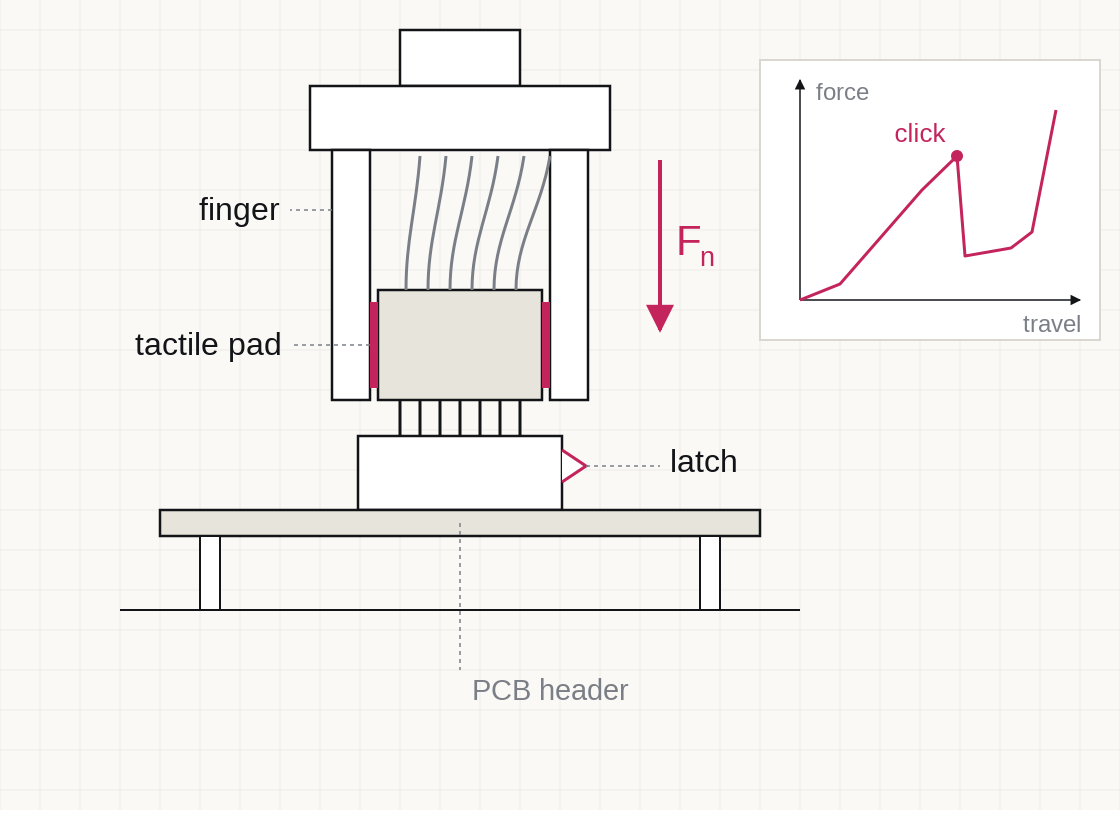
Seating connectors, press-fit parts and snap fits, where a correct insertion comes down to a few newtons and a change in resistance.
Dermis trains dexterous manipulation models for industrial applications: the contact-rich tasks on a factory floor that still depend on skilled human hands.
Illustrative visualisation of tactile pressure, grip width and force during one pick-and-place. Generated for this page; not recorded data.
Industrial robots are precise where the world is fixed. Most of the work still done by hand is not: parts are flexible, fits are tight, and success is decided by contact, not by sight alone.
We focus on industrial tasks where a grasp has to be felt as well as seen, and where today's automation either fails or needs expensive custom tooling.
Seating connectors, press-fit parts and snap fits, where a correct insertion comes down to a few newtons and a change in resistance.
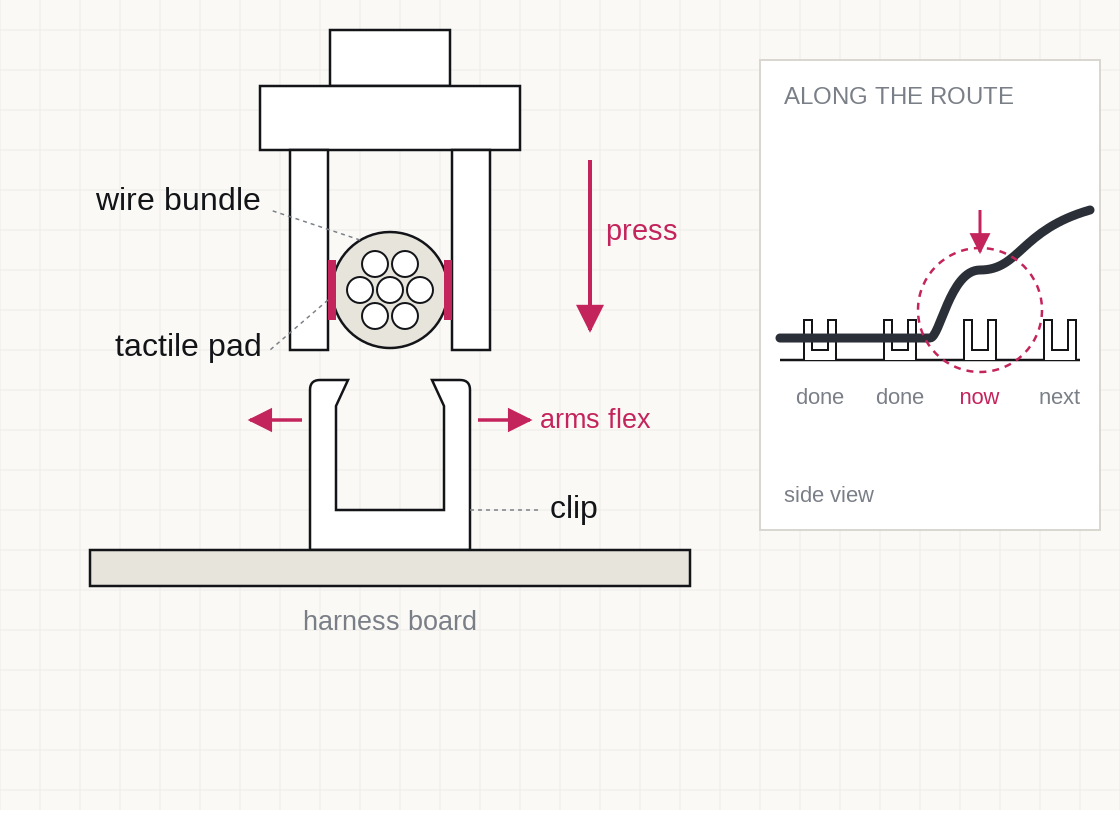
Routing, clipping and plugging cables and wire harnesses: long, flexible parts that change shape every time they are touched.
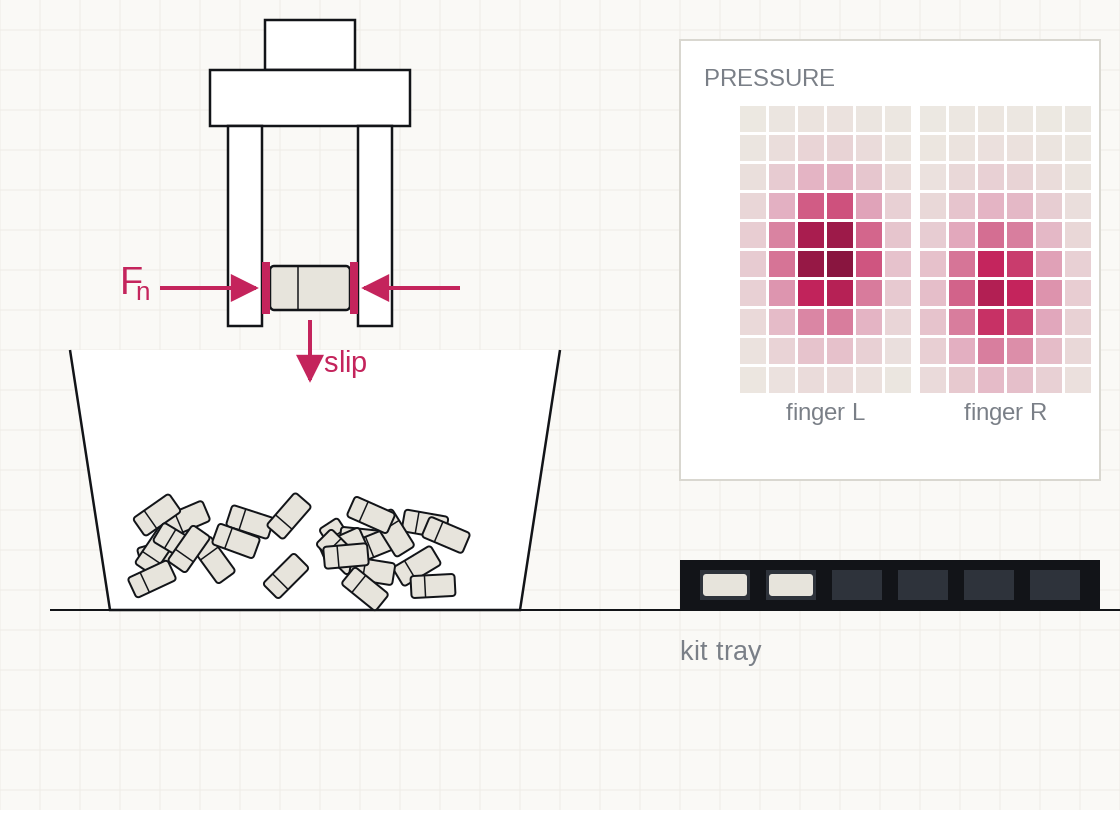
Picking small, mixed and slippery parts from bins and trays and placing them in a known pose, without dropping or damaging them.
Four principles shape how we collect data, train policies and decide whether they work.
Our models are designed to read contact pressure and slip alongside vision and joint state, so a policy can react as a grasp starts to fail, not after.
Experienced operators already solve these tasks. We capture how they do it, including what they feel, and use those demonstrations to train robot policies.
Simulation gives us scale. Real contact measurements keep it honest, so what is learned in simulation holds up on hardware.
A model counts as working when it succeeds on a physical robot across repeated trials, not when it scores well in simulation.
Each part of the programme feeds the next: better data makes better models, and honest evaluation tells us which data to collect next.
Demonstrations recorded with vision, hand pose and tactile signals together, time-aligned.
Manipulation models for multi-finger hands and grippers that use touch alongside vision.
Repeatable industrial task setups that report success rates and the cause of every failure.
Methods to move a learned skill across grippers, hands and robot arms.
Short pieces on how we think about touch, data and dexterity. All notes →
We'd like to hear from researchers, engineers and hardware makers working on the same problems.